Understanding Food's Impact on Sleep
How Food Affects Your Sleep
Many people are often surprised to discover that what they eat can directly influence the quality of their sleep. Understanding the connection between food and sleep can help improve one's health and overall well-being.
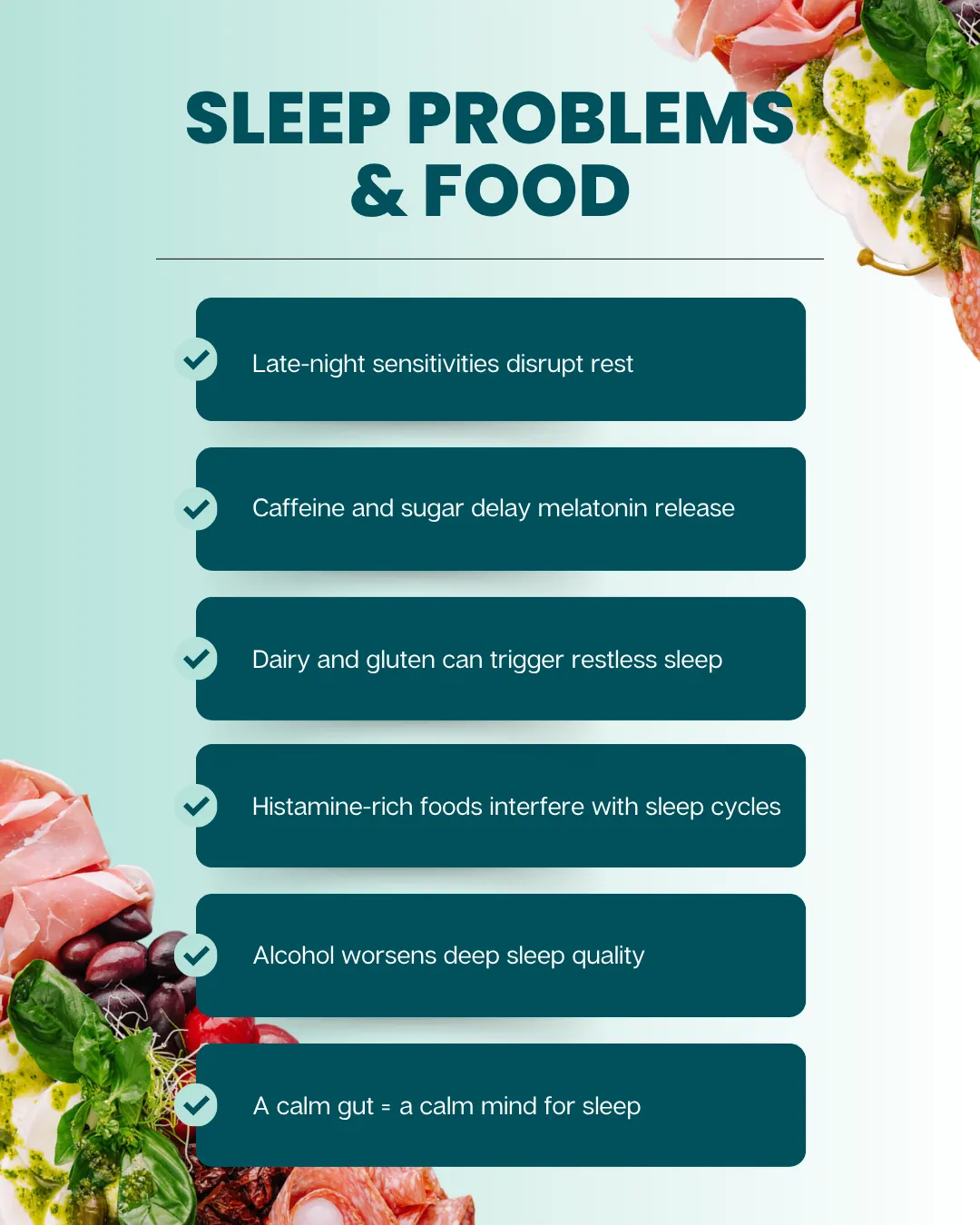
1. Late-night Sensitivities Disrupt Rest
Eating certain foods too close to bedtime can make it harder to fall asleep. Foods your body might be sensitive to can cause discomfort, leading to restless nights. Identifying these foods can be a key step to better sleep.
2. Caffeine and Sugar Delay Melatonin Release
Caffeine is known for its ability to keep us awake. But combined with sugar, it can significantly delay the release of melatonin, the sleep hormone. Avoiding them in the evening can help align your natural sleep cycle.
3. Dairy and Gluten Can Trigger Restless Sleep
Foods like dairy and gluten may cause digestive issues for some, resulting in discomfort during sleep. If you suspect these foods are affecting you, consider speaking with a healthcare provider about testing for sensitivities.
4. Histamine-rich Foods Interfere with Sleep Cycles
Foods high in histamines can lead to wakefulness during the night. These include aged cheeses and processed meats. Reducing intake of such foods might help improve your sleep cycles.
5. Alcohol Worsens Deep Sleep Quality
While alcohol might induce sleep initially, it can disrupt natural sleep patterns and affect the quality of deep sleep. This disruption can leave you feeling tired the next day despite sleeping for several hours.
6. A Calm Gut Equals a Calm Mind for Sleep
The saying ‘a calm gut equals a calm mind’ holds true when considering sleep. A healthy gut can promote relaxation and make it easier to drift into a peaceful sleep. Maintaining a balanced diet is essential for gut health, which in turn supports restful sleep.
Improving Sleep Through Diet
Improving your sleep might be as simple as making a few dietary adjustments. Here are some tips to consider:
- **Identify Triggers:** Keep a food journal to see if any foods might be affecting your sleep.
- **Limit Caffeine and Sugar:** Try to keep these stimulants out of your diet at least four hours before bedtime.
- **Consult a Professional:** If you suspect food sensitivities, a healthcare provider can conduct tests to help identify the culprits.
- **Try Relaxing Foods:** Consider foods that promote relaxation, such as whole grains, turkey, and herbal teas, to incorporate into your evening routine.
By understanding and adjusting your eating habits, you can take meaningful steps towards a better night's rest. Your body and mind will thank you!