Mindful Eating: Benefits and Practices
Mindful Eating: Transform Your Relationship with Food
Have you ever sat down for a meal and suddenly realized you were eating on autopilot? You might have been distracted by a TV show or scrolling through your phone. This is where mindful eating can make a big difference. Let's explore the benefits of mindful eating and how it can change the way you approach meals.
What Is Mindful Eating?
Mindful eating involves paying full attention to the experience of eating and drinking, both inside and outside the body. This approach encourages you to focus on your senses, including the taste, smell, and texture of food. It is about listening to your body, being present, and making healthier choices.
Benefits of Mindful Eating
Mindful eating offers numerous advantages, transforming how you interact with food and improving overall well-being. Here are some key benefits:
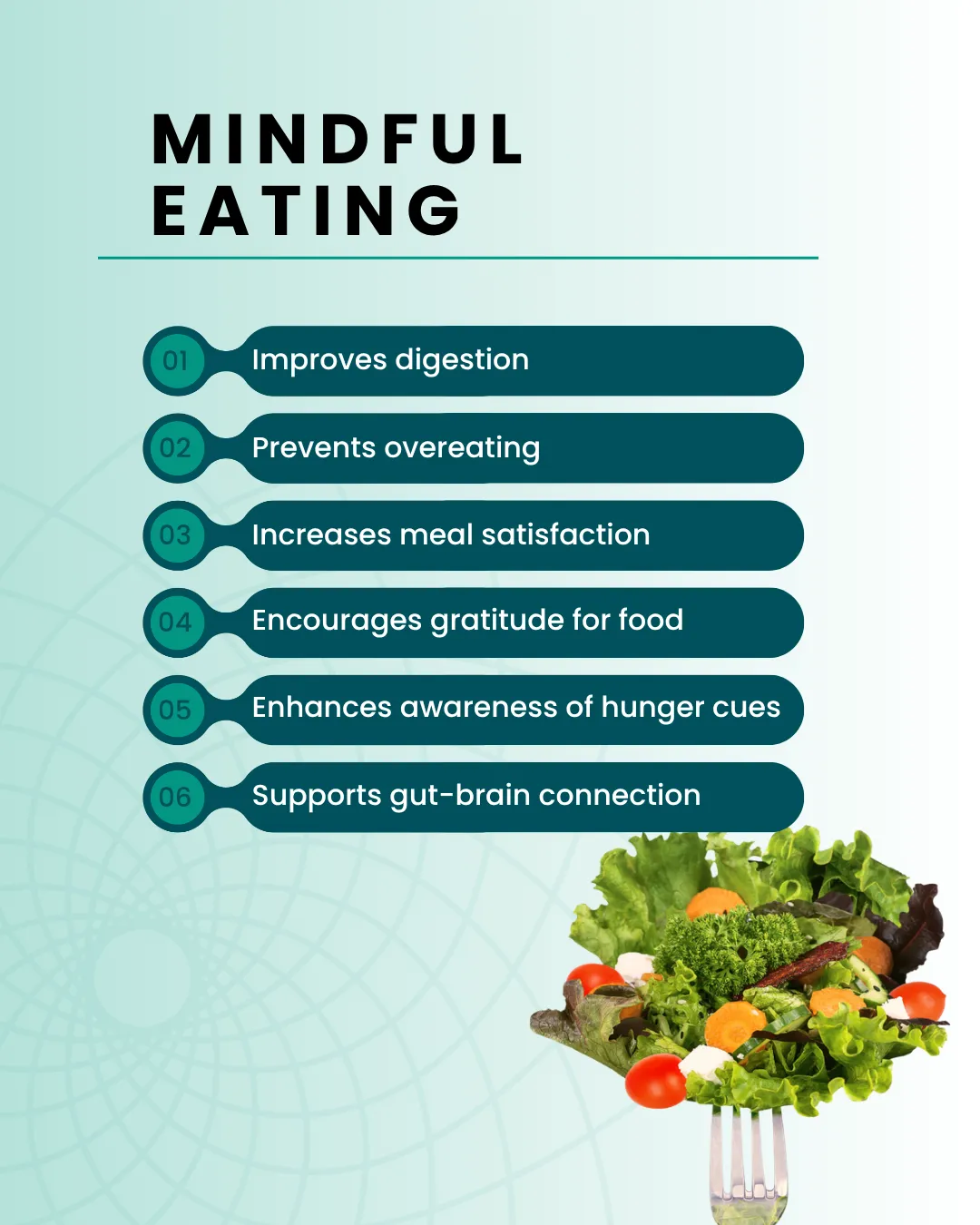
1. Improves Digestion
When you eat slowly and thoughtfully, your body has time to properly digest food. Chewing thoroughly can ease digestion and can help the body absorb nutrients better.
2. Prevents Overeating
Mindful eating encourages you to recognize when you are full, avoiding the tendency to overeat. By listening to your body’s hunger signals, you can eat the right amount.
3. Increases Meal Satisfaction
Focusing on your meal allows you to enjoy every bite. It leads to greater satisfaction and enjoyment, making meals more fulfilling.
4. Encourages Gratitude for Food
Taking time to appreciate your food and where it comes from promotes a sense of gratitude. This gratitude can make eating a more meaningful experience.
5. Enhances Awareness of Hunger Cues
Being mindful helps you identify when you are genuinely hungry and when you are not. It allows you to understand your body’s needs, reducing unnecessary snacking.
6. Supports Gut-Brain Connection
Your gut and brain communicate closely. Mindful eating supports this connection by fostering a healthy interaction between what you eat and your mental well-being.
How to Practice Mindful Eating
Practicing mindful eating is a skill that takes time to develop but is accessible to everyone. Here are steps to begin:
1. Start with Small Changes
- Begin by choosing one meal a day to eat mindfully. Gradually extend this practice to other meals.
2. Eliminate Distractions
- Turn off the television, put away your phone, and choose a quiet place to eat. Focus entirely on your meal.
3. Appreciate Your Food
- Take a moment to reflect on where your food came from and who prepared it. This reflection can deepen your eating experience.
4. Engage Your Senses
- Notice the colors, smells, and flavors of your food. Take small bites and savor each one.
5. Chew Thoroughly
- Chew your food slowly and fully. This not only aids digestion but also encourages greater enjoyment.
6. Listen to Your Body
- Pause often and check in with your hunger levels. Trust your body to tell you when it has had enough.
Conclusion
Mindful eating is more than a dietary choice; it's a lifestyle that can improve your relationship with food. By bringing awareness to your eating habits, you encourage healthier choices and a happier digestive system. Start by incorporating mindful eating into your routine and enjoy the benefits that follow.