Identify and Address Hormone Imbalance Now
Understanding the Red Flags of Hormone Imbalance
Hormones play a vital role in keeping our bodies functioning correctly. They are like messengers, traveling throughout our bodies, telling organs what to do and when to do it. But what happens when these messengers are out of balance? Recognizing the warning signs of hormone imbalance is crucial for maintaining overall health and well-being.
Key Symptoms to Watch For
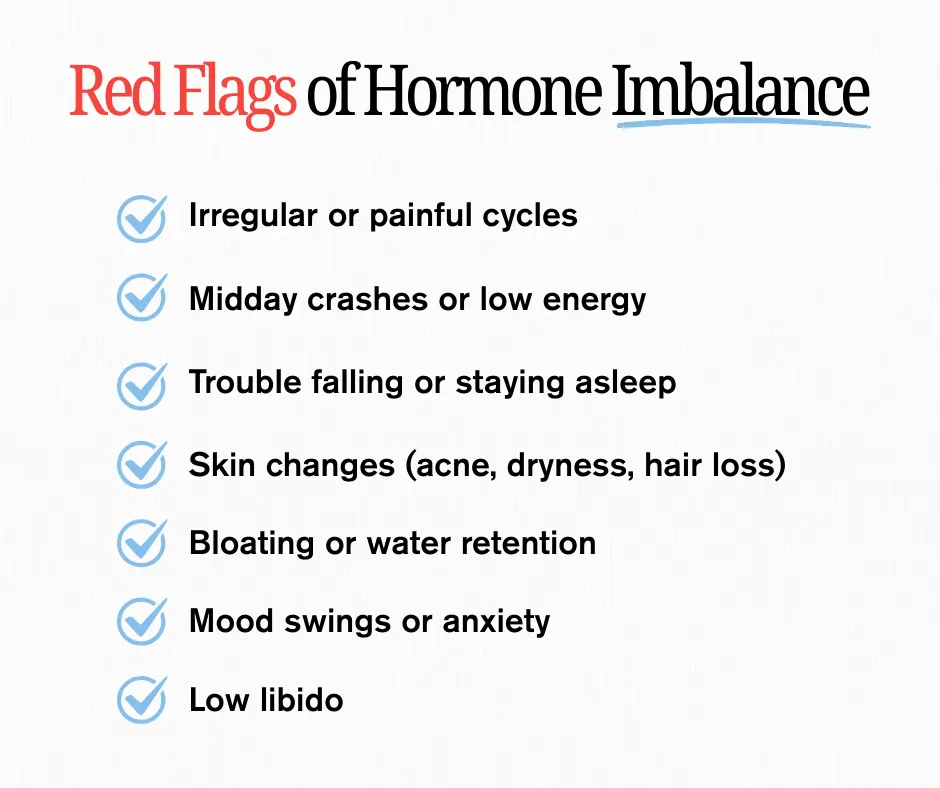
Irregular or Painful Cycles: Hormones control menstrual cycles, and any imbalance can lead to irregular or painful periods. This can be due to stress, diet, or medical conditions like polycystic ovary syndrome (PCOS).
Midday Crashes or Low Energy: Feeling tired even after getting enough rest can be a sign of hormonal imbalance. Our bodies rely on hormones like cortisol to manage energy levels throughout the day.
Trouble Falling or Staying Asleep: Hormones such as melatonin and cortisol manage our sleep cycles. An imbalance might lead to insomnia, or trouble staying asleep.
Skin Changes (Acne, Dryness, Hair Loss): Hormones affect the health of our skin and hair. An imbalance might cause acne outbreaks, dryness, or even hair loss.
Bloating or Water Retention: Feeling bloated or retaining water can be due to hormones affecting how our bodies store and use fluids.
Mood Swings or Anxiety: Fluctuating hormone levels can influence emotions, leading to mood swings or unexpected anxiety.
Low Libido: A decrease in sexual desire can be linked to changes in hormone levels. This might be caused by stress or other underlying health issues.
What Causes Hormone Imbalance?
There are several reasons why hormone levels may become imbalanced:
Stress: Chronic stress affects the production of hormones like cortisol and adrenaline, leading to imbalances.
Diet: A diet lacking in essential nutrients or high in processed foods can disrupt hormone production.
Lack of Physical Activity: Regular exercise helps to regulate hormone levels.
Age: Hormone levels naturally change as we age, particularly during puberty, pregnancy, or menopause.
How to Address Hormone Imbalance
By recognizing and addressing these red flags early, you can work towards rebalancing your hormones:
Healthy Diet: Incorporate more fruits, vegetables, lean meats, and whole grains into your meals. Avoid processed foods and sugars.
Regular Exercise: Aim for at least 30 minutes of physical activity most days of the week. Activities like walking, cycling, or yoga can help.
Stress Management: Practice meditation, deep breathing exercises, or spend time doing things you love to help reduce stress.
Regular Sleep Schedule: Try to go to bed and wake up at the same time every day. Ensure your sleeping environment is quiet and comfortable.
Consult a Healthcare Professional: If symptoms persist, consider seeking the advice of a healthcare provider. They might recommend hormone therapy or other interventions.
The Importance of Being Proactive
Listening to your body and identifying these red flags early can go a long way in managing your health. With the right lifestyle changes, you can support your body in maintaining balance and vitality.
Stay informed, be proactive, and take steps towards better health today. By understanding and addressing the symptoms of hormone imbalance, you can live a more energetic and fulfilling life.